About this episode
MENTIONED IN THIS EPISODE
Check out our sponsors and resources: Visit Our Sponsor Page
Transcript~48 min read
It’s getting late, you know you “should” go to bed. But you just can’t…or won’t. You tell yourself, just one more episode, or a few more minutes of scrolling, or a little more work to sneak in. It seems innocuous, but what if it was actually causing a world of harm? To your health, relationships, state of mind, performance at work, and more?
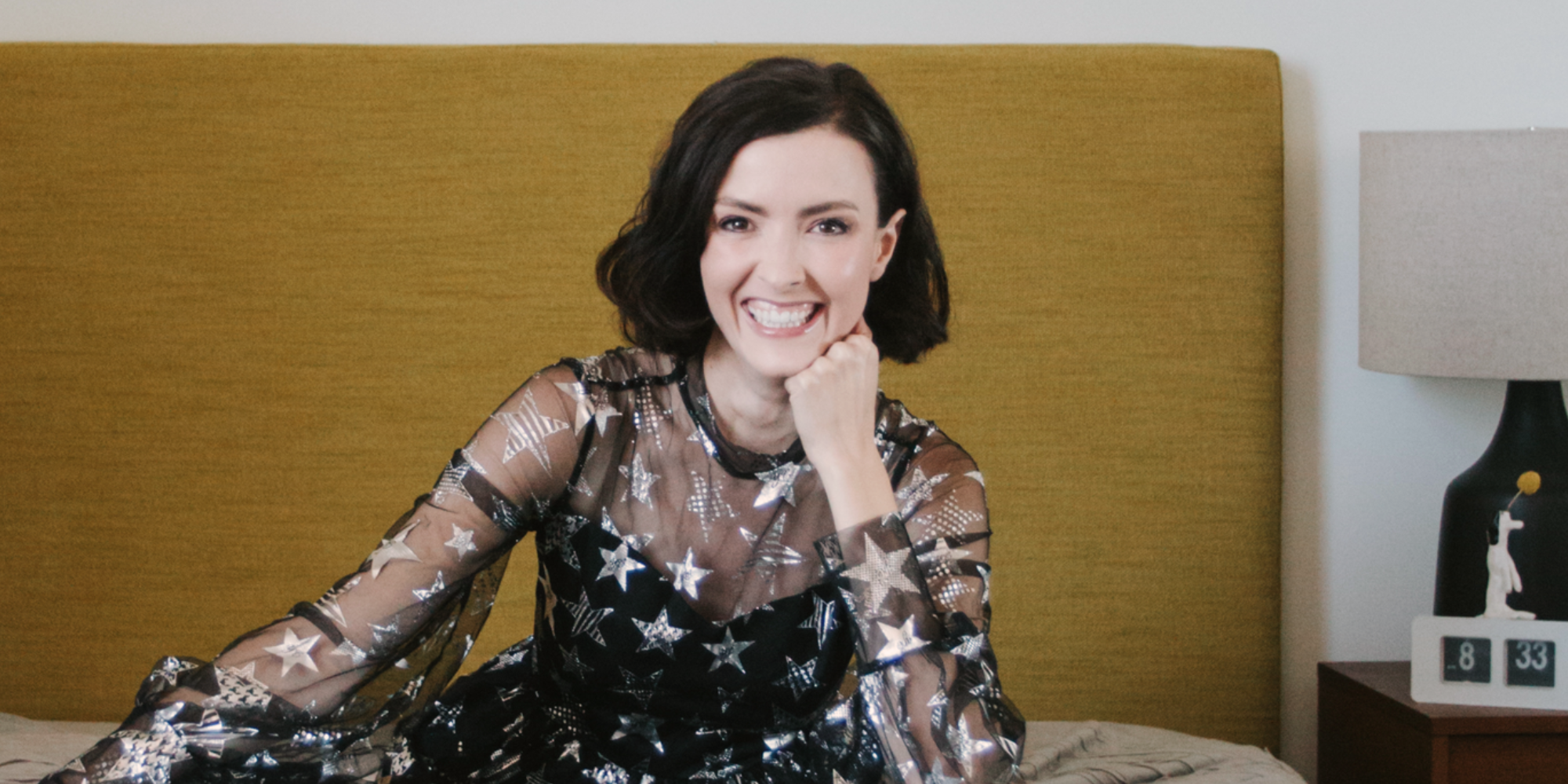
Our guest is Vanessa Hill, PhD, a leading sleep scientist and Research Fellow at CQ University, who specializes in the science of bedtime procrastination. She is a Science Communication Fellow at the Museum of Science and an expert in how our digital habits shape our rest. And today, we’re talking about:
- The near-addictive quality of sleep procrastination, and the hidden reason for it
- The surprising research showing why blue light might not be the sleep villain we’ve been told it is
- Why your “night brain” finds it nearly impossible to “do the right thing, and get to bed”
- The one habit that often matters more than the total minutes spent on your phone
- Why common sleep advice often fails, and what to do instead
If you find yourself stuck in a cycle of late nights and tired mornings, you are not alone. Listen to this episode to discover a more compassionate, science-backed way to reclaim your rest and feel like yourself again.
You can find Vanessa at: Vanessa’s Substack | Instagram | Episode Transcript
Next week, we’re sharing a conversation with Elena Brower about the wisdom of emptiness and the art of showing up to your life completely.
Check out our offerings & partners:
- Join My New Writing Project: Awake at the Wheel
- Visit Our Sponsor Page For Great Resources & Discount Codes
photo credit: Zaza Weissgerber
_____________________________________________________________________________________________________
Episode Transcript:
Jonathan Fields: [00:00:00] So have you ever found yourself on the couch at 1011 12:01 a.m. watching videos on how the pyramids were built? Even though you know you have to be up in 3 or 4 or five hours. Or maybe scrolling on your phone. It’s that strange moment where your brain says you should go to bed, but some other part of you just isn’t ready to let the day go. We call this bedtime procrastination, and most of us carry a lot of guilt about it. We feel like we kind of should be falling asleep, or that we just lack the willpower to put the phone down or stop watching TV. But what if the late night scrolling or watching is actually a search for something deeper, like a sense of agency, or me time, or meaning or identity that you just didn’t get during your busy work day. Today, we’re looking at sleep through a very different lens. We’re moving away from the quote, sleep hacking, performance, sport, and towards something much more human. And joining me is Vanessa Hill. She is a sleep scientist and research fellow at CQ University who has dedicated her career to studying why we delay sleep, what it actually does to us when we do it, and how we can actually bridge the gap between our intentions and our behaviors. We drop into why revenge bedtime procrastination is often a cry for help and autonomy. We explore the intention, behavior gap, and why it’s hardest to close at night. We really think about a simple pattern interrupt to help you move towards bed without struggle, and why being consistent might actually be more important than being perfect with your devices. And we bust a really huge myth about blue light and screens at bedtime. So excited to share this conversation with you. I’m Jonathan Fields and this is Good Life Project.
Jonathan Fields: [00:01:48] I’ve been somebody who is fascinated with sleep for a number of years. Um, I’ve gone through seasons of my life where sleep was great and seasons of my life where sleep was not so great. Um, and as I grow older, also I’m 60. Um, I’m getting curious how age affects sleep. And also I think you can’t be online for more than a hot minute without seeing something about sleep often being blasted at you, and there’s a lot of head spinning around it. I’m really interested in where your focus has been though, especially on the research side. So you study sleep and more specifically, bedtime procrastination for for people hearing that phrase for the first time, which I’m guessing is a lot of people. What is it really? And, and why do we care?
Vanessa Hill: [00:02:39] I think for a lot of people hearing that phrase, they will feel guilt around bedtime procrastination. They will feel cautious of their bedtime behaviors. They may feel like they’re doing something wrong. And this is something that my research has found, and I would love to dive into that. Bedtime procrastination is when you intentionally delay your bedtime. And an important caveat is without any external circumstances. So not because your kid has been sick, because your dog is up in the middle of the night, because you’re a shift worker and you can’t go to bed until 2 a.m. you delay your bedtime because you want to. There’s something intrinsic and internal that makes you say, you know, I know I’m not going to feel as good tomorrow, but my night brain just wants some me time and wants to do something now. And that’s what I’m optimizing for. So you really optimize for the moment rather than your future self. Now that time, procrastination really started doing the rounds online during the pandemic, actually in early 2020. And it was called revenge, bedtime procrastination. And in the, in the public, uh, media, there was this concept that we were getting revenge on our employers or our kids or whatever the thing was that was taking our time and attention during the day.
Jonathan Fields: [00:04:02] I mean, that’s such an interesting point, though, because it implies that there’s like a lack of agency in other parts of life. So maybe like the revenge part of it is, oh, this is something where nobody can stop me from doing this.
Vanessa Hill: [00:04:17] Right? And at night time, when the house is silent, when everyone has gone to bed, when you’re finished with work and your after dinner work emails and whatever else it is you’re doing, that time is one where you have complete autonomy and you can really dictate your schedule in a way that many people can’t in the afternoon or other parts of the evening.
Jonathan Fields: [00:04:37] Yeah. And again, um, you’re very intentional about calling out the fact that, you know, this is not about shift work or having to cover or having a sick kid or having something where it’s just a circumstance where you really do have to respond to it and you may end up being up half the night because you got to take care of something. This is you hitting a certain moment where you’re kind of. Your brain is like, I probably should be going to bed now. And we’ll talk about that word should also. What does this look like in real life? Like what does real life examples of this?
Vanessa Hill: [00:05:06] So what we found is that most of the time people are using screens. So you’re watching TV or Netflix or whatever it may be. You’re using your phone, you might be playing a game, you might be doing a crossword, you might be reading a book, but mostly you’re going to be using the screen and you just want some me time. So people will think that they should go to bed at a certain time because maybe they have a scheduled bedtime, maybe they need to get up for a certain alarm time in the morning, whatever it may be, and people are just pushing their bedtime beyond that time.
Jonathan Fields: [00:05:44] So before we get into this in a lot more detail, I guess the big question in my head is, why does this matter? I mean, what what is the harm being done in just like. Okay, so I want instead of going to bed 11, I’m going to end up going to bed at two. Like, what’s the harm that’s being done or what? Why? Why is this not an okay thing?
Vanessa Hill: [00:06:06] To be a scientist is to not give you a definitive answer on this and, and to say, well, there could be harm and there could not be harm, okay? And if there is harm, it is in affecting your sleep schedule, not getting the duration or quality of sleep that your body needs and having an inconsistent sleep schedule, which actually matters quite a lot. So when I started researching this topic, there was a lot of information in the media. There were some studies that were suggesting that, hey, that time procrastination is bad because it affects our sleep. And if we aren’t getting enough sleep, whatever that looks like for for people, that is bad for their health. So we’re kind of coming in with a lot of assumptions. And we said, okay, we’re going to do a big review and just have a look at all of the results that exist in the literature, in the scientific literature. So we did a big analysis of all the studies out there, and we did find that there was an association between higher bedtime procrastination, lower sleep quality, lower sleep duration and increased daytime fatigue. Okay, so if you are procrastinating your bedtime, there’s a link with these different sleep outcomes being bad, right? So that could be the case, except that there is just so much individual difference in our lives, right? Like in how much sleep we need in, are we going to work the next morning? Is it a weekend? Those types of things where it’s really hard to have these blanket statements where you say, hey, bedtime procrastination is bad because maybe it’s not all of the time, but perhaps it’s not bad for everyone, and perhaps there’s something else going on there.
Vanessa Hill: [00:07:42] And I think that as a scientist, you can get this high level data. You can say save that time. Procrastination is bad, but along the way, what we discovered was that no one had actually spoken to people and sat down and said, hey, what are you doing and why are you doing this? And so we did that for a study. We did an interview based study where we just asked people, hey, what’s going on? Tell me about your sleep routine to actually figure out what people were doing. And this is one of my favorite studies that I have led in my academic career, because what we discovered was that people had this psychological need for me time. And up until that point, a lot of the literature had kind of dismissed that there was any need or driver behind this behavior and that it was just something that should be stopped. But when people say, I have no autonomy, I need me time. I like to pursue interests, and this is the only time that I have in the day to explore that part of my identity or I want to socialize with my friends. And so every Wednesday night, every Friday night, every Saturday night, I stay up past my bedtime to do that. There’s this meaning and need that comes out of those conversations that to that point had really been missed.
Jonathan Fields: [00:09:03] I mean, that’s so interesting, right? Because I think the normal association is to say, well, you just keep blowing past your bedtime, you know, you should be going to bed early, but, you know, it’s a couple hours later and we start to moralize this decision. We start to sort of like judge and we start to self shame also. Um, and, but what you’re saying here, if I’m getting this right, is that bedtime procrastination can for some really be about trying to meet a need that the rest of the day just isn’t meeting.
Vanessa Hill: [00:09:32] And then it becomes really complicated as a scientist and someone who cares about sleep, health and, and wants people to have the best possible sleep health for them because you’re like, okay, this behavior isn’t great for some people, but they also need it to fulfill different psychological needs that they have. So how can we meet them in the middle in a way? How can we ensure that they are getting the sleep that they need, that they’re not tired during the day? Because that can have all kinds of flow on effects for your mood and your relationships, and not showing up to work and not being productive and calling in sick and, and all of these consequences in everything from the workplace and the economy to your personal life. So how can we help people have good sleep, health, but also be fulfilled humans.
Jonathan Fields: [00:10:21] Yeah. Did you, um, did you see patterns when you were doing this research in terms of like, okay, so like, maybe there are needs that are just not being met or desire is not being met during the day. And here’s this little window right before I go to bed where I get to control it. Were there common patterns or common unmet needs that you saw?
Vanessa Hill: [00:10:38] One of the interesting ones that came up was interest. I thought this was really interesting because a lot of people were watching YouTube videos before they went to bed. I have a YouTube channel as well, and so I thought that was really funny because I had never before considered that the time of day when people were watching my YouTube videos, and it might actually be when they’re up in the middle of the night or just before they’re going to bed. So a lot of people would say things like, you know, it was 10:00, and I just started wondering, how are the pyramids made? And then I started watching videos on ancient Egypt. And then all of a sudden it was 2 a.m. so people were talking about that. Some people were talking about how they, for example, exist in a society where they can’t express all parts of their identity, and then they can watch videos, join online communities in the late hours of the night to be part of those communities. I thought that was really interesting. Uh, this behavior of procrastinating your bedtime, we think may be more common in people who are new parents and people who have ADHD. In people who are new workers. So who started new careers where they may not have as much autonomy as people who may be middle or late career. So it’s really interesting to consider the populations and the people who may be more likely to procrastinate going to bed.
Jonathan Fields: [00:12:04] Yeah. I mean, it’s so interesting, right? Because all those populations you just identified, there are a lot of them where if you ask them some version of the question, like, do you have enough me time in your life? Probably a lot of them would answer no. So then it would make sense that at that time before they go to bed, it’s like, I’ve got to sneak this in because I’m losing myself and my, my sense of identity. Um, the way that they spend that time though, I mean, so you just shared watching YouTube videos is one particular way. Um, so maybe it’s, you have a fascination or an interest or curiosity and you’re like, okay, so this is the time I get to go and play with it, explore it, Explore the community thing is really interesting to me. Also to take me more into that.
Vanessa Hill: [00:12:43] In the study we did, which was the interview based study, when we spoke to people, there was one person who we spoke to who I identified as queer, and they said that in my job every day, I can’t really tell people about this. I feel like I can’t talk to people about this, but I just need a space where I can be part of my community. And whatever the need or community or interest is. Often our days are so busy, are so packed with work and caregiving and appointments and all of the other things that we need to do this time before bed or when perhaps we should be in bed. Whatever should means is the time that people have to actually explore that. And something that I grapple with as a sleep researcher is that the guidelines say, don’t use technology 60 minutes before you go to bed. Right. That’s that’s what’s put out from the American Academy of Sleep Medicine. There are reasons that these guidelines exist, but people don’t follow them because at this time, 60 minutes before we go to sleep is often the only time we have to be a part of those communities to explore those interests. And these other things are also important for our well-being, right? Like socialization is important for well-being. Having a strong sense of self is important for well-being. So how do we balance all of these things like sleep, health and mental health and socializing and self-identity? How? How do they all fit together in the puzzle of our overall health?
Jonathan Fields: [00:14:27] And we’ll be right back after a word from our sponsors. There’s a lot on across social media On. These are the eight things that you must do for sleep. Like this is the sleep ritual that you have to have. This is a morning ritual. This is evening ritual. Like these are the five things that will ensure you do it. And, um, it’s almost like sleep hacking has become a performance sport.
Vanessa Hill: [00:14:50] I mean, there’s a whole industry that supports it, right?
Jonathan Fields: [00:14:53] I mean, so how do you feel about all that? I think we know.
Vanessa Hill: [00:14:59] From from my perspective, stress and anxiety are the top reasons why people have trouble falling asleep. So I think that wind down routines are super important. If there is technology that supports you winding down, whether that is some fancy EEG headband that you can meditate with, whether that is a white noise machine, whether that is some kind of weighted blanket that can help you feel more secure. I am all for that. I do think that technology and these different innovations are tools that we can use in our very chaotic, busy lives to help us de-stress and to help us wind down and to help us just feel at peace in the evening, which kind of help us fall asleep. Right? So I, I’m, I’m definitely not opposed to the greater sleep industry in that sense, something that does bug me. If we want to talk about that, is how a lot of these innovations fall into the marketing and advertising cycle where they promise better sleep. And I think that that’s really hard to prove. That can look different for everyone. And what it can do is lead people to when they can’t sleep, buy products rather than talk to their physician. The amount of people who come to me and say, Vanessa, I’m just having trouble sleeping. Um, you know, what do you think I should buy to help? And the answer to that is therapy is actually the gold standard recommended treatment by the American Academy of Sleep Medicine to help with sleep issues. And there’s a lot to unpack there. Like a lot of people don’t want to go to sleep therapy. They just want to like buy some robotic pillow that might help them fall asleep a few minutes faster. Right? Except it’s just interesting how we assume that we need to do more to help us sleep rather than less.
Jonathan Fields: [00:17:00] Hmm. Deconstruct that a little bit more.
Vanessa Hill: [00:17:06] So when people have trouble sleeping, there’s almost this consumerist mindset that if we just buy one more thing, it will help solve the problem. So if I’m having trouble falling asleep or if I wake up overnight. Should I buy a $4,000 pod that cools my bed, that I can put on my mattress and gives me all of these statistics in the morning? Or should I take more time off work? Take time to de-stress. Like actually do less in our lives in a way that could help with personal stress or anxiety. That’s what I that’s what I mean.
Jonathan Fields: [00:17:44] So if I’m so if I’m getting it right, it’s less that you’re not saying, look, all of these different things may not help, but a particular person in a particular moment. But for a lot of people, there’s a bigger, more central thing to really dive into, to explore, to unpack. That may well have a much more substantial impact on your sleep. So rather than sort of like trying to buy the things that may work on the fringes, what if we go into the core and really deal with what that might be? Does that make sense?
Vanessa Hill: [00:18:14] Yeah, yeah, it does. And I will just give a little plug for a type of therapy called CBT, which is cognitive behavioral therapy for insomnia. Many people won’t have heard it, but it is the number one recommended treatment for people who have trouble falling asleep, who wake up during the night. It’s covered by health insurance and it is really effective. It has very high long term effects, but a lot of people don’t know about it because it’s a it’s a six week program that you have to do and not a pill that you can take or a blanket that you can buy. And I think that for some of the other things that can help people fall asleep, I don’t want to discount those. You know, if people are drinking a certain type of tea or using a certain type of blanket or doing these things, and they feel like it’s helping them fall asleep and they’re not waking up overnight, great. But I think it is always worthwhile in a conversation about sleep to actually just let people know what the number one recommended treatment is.
Jonathan Fields: [00:19:17] Yeah, I mean, that makes so much sense to me also because, you know, when I, I know when I’ve gone through windows where I’m struggling and granted, everyone has a different pattern and a different life. Often for me, you know, it’ll be. I’m spinning about something. Um, you know, so it’s what’s happening with me psychologically. It’s like, what’s like and for me, so for me, things like, you know, a long time practice in mindfulness meditation and things like that have been incredibly effective at helping me. Okay, say, oh, wait, wait, wait, wait, thinking I’m spinning about something. Just let it go. Come back to my breath. You know, more behavioral interventions have been super helpful to me to get back to it. And I also do, you know, in full disclosure, like I listen to things, I have the apps, I have the devices. Um, but it’s not a yes end for thing for me or it’s not a, it’s not a either or thing for me. It’s more of like a really trying to deal with the core. And then a s n I want to drop into your earlier comments about screens and I want to unpack that a little bit more also, because one of the things that we always hear and that we have been told over and over and over is, you know, you, whether it’s 1 hour or 2 hours or three hours before you get. You must be away from screens. And oftentimes the. You know, I’ve, I’ve heard, well, it’s the blue light in the screens that somehow react with your brain and doesn’t allow you to dial down to produce melatonin. Take me into what the truth is here.
Vanessa Hill: [00:20:44] I’m so happy that you asked me this question, because there are a lot of misconceptions out there about blue light, and what you just hit on is kind of true, and that is part of the problem. So you mentioned blue light and melatonin. Now blue light can suppress our production of melatonin. And that is a real biological mechanism. What is nuanced is the effect that that actually has on our sleep. Okay, so there’s a very famous Harvard study that was done about ten years ago that I decided really often in a way that’s kind of designed to scare us and make Blue Light the villain of our sleep. And in the study, people read ebooks or a regular paper book, and the people who read ebooks, their melatonin was delayed by 90 minutes. The melatonin production was delayed. So that’s substantial. It is substantial. And I say that statistic thrown around a lot. But if you go and you unpack the methods of this study, they read an ebook on maximum brightness, 30cm away from their face for four hours before bedtime. And I just like to think about how.
Jonathan Fields: [00:21:55] Like, who actually does that in the real world?
Vanessa Hill: [00:21:57] Who does that? Who has four hours to read an ebook before they go to bed? I’d love to know that. Who is reading it on maximum brightness? Right? So I think it helps to unpack the methods of a lot of these studies. But what was really interesting about this one study was even though melatonin production was delayed by 90 minutes sleep onset, so the time that people fall asleep was only delayed by just under ten minutes. So I think it’s pretty remarkable that you can even use a device on maximum brightness for four hours before you try to fall asleep. It can suppress your melatonin production, but then you still only fall asleep ten minutes later, right? Now, keep in mind that this is just one study. There have been so many studies in this area, and a big review paper came out at the end of 2024 that collated all of the research on blue light, and actually found that in adults, it has a negligible effect on sleep onset latency, which is how fast you fall asleep. Right? Though some studies like this one found okay, there was a ten minute delay. Other studies found a three minute delay.
Vanessa Hill: [00:23:01] Other studies found that people fell asleep faster. Right. So there’s just evidence kind of across the spectrum of quicker or slower or whatever. And it just kind of all pans out around zero where you’re like, yeah, it’s just this. Maybe there’s something happening here, but in our real lives, it’s not really having much of an effect. Now all of this happened. And also at the end of 2024, the National Sleep Foundation compiled a panel of experts on sleep health to really answer this question. Like, does screen use at bedtime impact sleep health? And what they all concluded based on all of this evidence, was that, and I think this is an important caveat. It does in children and teenagers, but in adults, there isn’t clear evidence that there is an impact of screen use on our sleep health. And I really love telling people about the results of this expert panel, right? Because you have the leading experts in this from all across different fields, right? From circadian biology to sleep medicine to sleep psychology and research. And people came together and they just couldn’t reach a consensus on if it was harmful.
Jonathan Fields: [00:24:12] Is there a sense for why the difference between kids and adults?
Vanessa Hill: [00:24:16] Kids are a lot more sensitive to the effects of blue light than adults are. So it’s not recommended. And kids screen time, I will say, is a whole other conversation that we should talk about for another hour. Uh, so that that is the thinking behind that.
Jonathan Fields: [00:24:37] Yeah. So then for adults across a lot of different research, okay. Yes. Mechanistically, it may actually be impacting, you know, like the, the, the, the onset of melatonin. But from a practical standpoint, behaviorally, it’s not doing much for most people. Like maybe it pushes back sleep a couple of minutes, it sounds like, but for most people, it’s kind of like a net zero impact or somewhat close to it.
Vanessa Hill: [00:25:04] Exactly. From a real life practical perspective, there isn’t much impact. Researchers have even wondered, okay, does the type of content matter? There have been studies where they have shown people suspenseful shows that end on a cliffhanger compared to boring environmental documentaries, and there hasn’t really been an impact of that either. So really, it just comes back to you. And a lot about sleep is personalized. What are your preferences? What do you find relaxing? For some people, what they find relaxing are watching YouTube videos of pressure cleaning and drain cleaning and people scrubbing rust off metal parts in their garage.
Jonathan Fields: [00:25:50] By the way. If you’re joining us and that’s, you know, judgments whatsoever, that’s fine.
Vanessa Hill: [00:25:54] No, I mean, that’s what some people like. Some people like listening to true crime podcasts that have so much gory detail, and they actually find that relaxing and can listen to that ten minutes before they go to sleep. Right? It is so personalized about what we need in order to honestly just distract our mind a little bit from its own thoughts and help us wind down and slip into sleep.
Jonathan Fields: [00:26:21] Yeah. Is there when you’re looking at that research? Also, I wonder if there’s was there a distinction made between, you know, watching a TV 6 to 12ft away versus having, you know, a screen like much closer to you, whether it’s a cell phone inches away or a notebook computer or something like that on your lap.
Vanessa Hill: [00:26:43] In the research, TV is often called passive media because it’s not interactive in the way where we scroll through it, we can swipe out of one thing and into another. We can accidentally end up in our work email, and we have no idea how we got there, because our thumbs just kind of took us there when we weren’t really thinking. So there is some research that indicate passive media may benefit our sleep or may not have an impact as much as active media, which are things like, you know, scrolling through social media, texting with your friends, gaming things that really require you to honestly be swiping or using a controller or whatever it may be and be really engaged in what you’re doing. What I like to recommend is that people find a TV show or some kind of content that is longer form that they find relaxing, and watch that before they go to bed. I think it’s a really good way to wind down where we are downshifting in a way. We are thinking of how we can relax and how we can just mark the end of our day in a way. And I really like TV for that compared to phones.
Jonathan Fields: [00:27:55] You know, it’s interesting though, right? Because even if we’re talking about TV, like what we’re talking about here is would be considered somewhat heresy among like a certain, a certain corner of like the sleep advice.
Vanessa Hill: [00:28:09] In. In some ways. Yes. And I mean, to anyone listening to this who thinks that this is bad advice, I would encourage them to read the latest research because there is so much that has come out in the last two years that has really captured the nuance of what is going on in our relationship with screens that didn’t exist five years ago. And I think a scientist, it’s really important to look at the new evidence and to consider that in terms of forming our opinions. And as a researcher, I do think that a lot of the guidelines should be updated to reflect using screens as sleep aids.
Jonathan Fields: [00:28:52] Mhm. I mean, I’m reflecting back, I haven’t done it a long time. Like we we’ve had a rule sort of like for a long time, like no, no TV in the bedroom. Like I think a lot of people heard that at one point, like, all right, I’m going to do that.
Vanessa Hill: [00:29:04] Yeah.
Jonathan Fields: [00:29:04] And still, if I reflect back to like an earlier time in my life where I had a TV in the bedroom. There were years where like, we would turn it on, put on a show, put the sleep timer on, and literally it would knock me out consistently. Like it was actually very effective at helping.
Vanessa Hill: [00:29:21] Yeah. There’s a sleep timer on TVs for a reason.
Jonathan Fields: [00:29:24] Yeah, exactly.
Vanessa Hill: [00:29:26] They have a button on the remote.
Jonathan Fields: [00:29:28] That’s so interesting. Are there other things that are happening with electronic devices that are not necessarily related to the light or the screens themselves that are actually causing or contributing to, um, sleep procrastination or sleep quality.
Vanessa Hill: [00:29:42] Something that’s really interesting about bedtime procrastination or sleep procrastination is that habit comes into it. So the way that we use habit or the term habit in science is kind of different to how we use it in everyday life and everyday life. We just kind of use it to describe anything that we do. But in research, it’s this invisible force that controls our behavior in a way that we don’t think about. So if you say you’re doing something on autopilot or you did something without thinking, that is habit coming into play. So for example, if you just pick up your phone and all of a sudden you’re in Instagram and you don’t remember unlocking your phone, you don’t remember hitting the app icon. Suddenly you’re just there. That is habit at work because you have just kind of non-consciously got into this app. The really interesting thing with bedtime procrastination is a lot of people do it for an extended period of time. So we’re not talking about 20 or 30 minutes before they go to bed. I mean like two hours or 2.5 hours past when they wanted to go to bed to get up for work in the morning, and they haven’t even thought about it.
Vanessa Hill: [00:30:53] This kind of came up in our research when people would say, I’ve lost track of time. I was on autopilot. All of a sudden it was 2 a.m. so you have this habit at play where it’s really just shaping your behavior in a way that you don’t realize. The reason I have started talking about habit in response to your question is because sometimes we need these environmental cues to come out of it, right? So if you’re on autopilot and you’re kind of not paying attention and your brain is just going on doing whatever it wanted to do, sometimes a notification can help you come out of that. Sometimes you could get an alert on your watch being like, hey, you wanted to go to bed at 11:00 to get up for work at 630 in the morning. Do you want to do that? We have smart speakers, we have smart lights. We have all of these things in our home ecosystem that can actually help us come back to our intentions in a way that can be helpful, that we can use to, to try to nudge our behavior more in line with where we wanted it to be.
Jonathan Fields: [00:32:00] Yeah. I mean, so it’s almost like you’re taking something where people might point to it and say, well, yeah, I just got caught in this loop of DMs or notifications or texts or whatever. You know, like there’s a new, there’s a new thing on my social media app and you’re saying, let’s subvert that a little bit and use that as a trigger to let us know. Oh, like to ask the question, am I, am I spending my time in this moment? And like, am I honoring decision that’s actually important to me? Maybe values based decision or something. Um, and can I use this as a pattern interrupt to say like, oh, like, I think actually it’s important for me to maybe close the devices and head towards bed, right?
Vanessa Hill: [00:32:39] There’s this thing in races called the intention behavior gap, and it exists across many areas of health, including sleep, where we have intentions to do things, whether it’s to go to bed at a certain time, to go to the gym regularly, whatever that may look like. But our behavior is often quite different from what our intentions are. And this exists with bedtime and bedtime procrastination, where a lot of people have an intended bedtime or a scheduled bedtime, which is often driven by the time you need to get up for work or school, or when your kids get up. And then we have the time that we actually go to bed. And there’s this discrepancy right, between our intention and our behavior. And for a lot of people, they want to act more in line with their intentions, but they feel like they just can’t. Right? And what the research suggests is that forming these habits are kind of closing that intention. Behavior gap is particularly hard in the evening. It is harder to form habits in the evening than it is in the morning. In the morning. We are kind of creatures of habit. We. It’s easier to kind of get up and do things and have a set routine by the time it gets to the end of the day.
Vanessa Hill: [00:33:51] We have used our self control all throughout the day. We have different hormonal changes than what we have in the morning. There’s this kind of messy chaos that exists in our day. That at the end of the day, we don’t want to make decisions anymore. We don’t really want to do what we know is probably good for us, what we intended to do in the morning, and in a really interesting way. This has come through in different studies and some of my studies on bedtime procrastination. We’ve sent people a text message as soon as they wake up and we’ve asked them like, hey, what time are you planning on going to bed tonight? They’ll tell us a time and then there’s always a discrepancy. They’re always going to bed later than their intended time. In other studies on habit, researchers have asked people to form a new habit, in their case, a stretching habit in this one study. And they’ve split people into two groups morning people and evening people. And the morning people in this one study were able to form the habit months sooner than the evening people. It is just hard to form habits in the evening and to act in line with our intentions.
Jonathan Fields: [00:35:00] And we’ll be right back after a word from our sponsors. So if one of the habits that we’re looking to form is better sleep habits, um, that’s going to fall under that. Like we’re still going to be challenged by that as well.
Vanessa Hill: [00:35:15] I think it’s important that we don’t communicate shame and guilt around using screens, because using screens in the evening can be a way to wind down. People use them as a sleep aid, but at the same time, many people want to minimize their screen use at night. They want to reduce that. They want to get to bed at a different time. But much of the sleep advice emphasizes self control, right? So, oh, you need more discipline. You just need to do this. You need to do that. You need to turn your phone off. You need to put it in another room. You need to just stop using it at 11 p.m.. But the sleep advice ask people to be at their best at the exact moment when we’re least resourced, when we’re exhausted, and when we’re exhausted at the end of a long day. Self control is one of the first things to go. So that’s why it can be really hard to close that intention behavior gap, to act more in line with our intentions and to change our behavior in the evening.
Jonathan Fields: [00:36:10] Yeah. And unlike, you know, exercise, like I’m going to go walk for 20 minutes. You could do that in the morning. You could do it in the middle of the day. Like if it’s a habit based on nighttime sleep, there’s only one time to do it. Like you can’t move it. It’s like, oh, I’m going to go to bed earlier at 11 a.m. or something like that. It’s like it just, you know, it has to happen at night. You know, assuming you’re not a shift worker, you have other things going on. Um, yeah, I mean, it’s really interesting the way that we’re wired that way. Um, when, so when you think about this and let’s say somebody’s been joining us and like, this all makes sense to me. I would love and I’m, I’m the person who is up. I, there’s a huge gap between my intention, my behavior. I say every night, I’m going to go to bed at 11 and one or 2 or three in the morning rolls around and have to get up at 6 or 7. And I feel like I feel that I am paying a price. Like this is a habit where there’s, you know, bedtime procrastination. I would, I wish I was behaving differently and I can feel it in my body. I can feel it in my bones. I can feel it in my state of mind. I am paying a price for this. I don’t want to pay that price anymore. It’s affecting me. And again, like you said earlier, some people actually may be fine with that. But like if you’re doing, you’re like, no, I actually like, I feel like I really am paying a price for this and you want to change it. Um, take me into some of the, the ways that we might think about changing this behavior.
Vanessa Hill: [00:37:35] So I ran a clinical trial where we tried a behavior change technique called behavioral substitution to help people reduce their bedtime procrastination for people who wanted to reduce their bedtime procrastination, where this was their goal. And what we did was we took people through our habits coaching program. We, uh, help them understand why they were delaying their bedtime and to find. Basically an alternate activity that they could do that would still give them some kind of reward. That was similar to their screen time. Now, when you do studies, it’s sometimes more black and white. We were trying to get people to do something that wasn’t on their phone. But I think for the people listening here, if you change to a different phone based activity, I think that’s fine. But when we think about habits and forming habits, there’s a habit loop that people may have heard of, but there’s a queue. So the trigger and the reason why you do that behavior, and then there’s a reward after that. It’s like, what are you getting out of that? And that can really reinforce different behaviors. So the first thing that we did with people was we had them monitor their behavior for a few weeks and kind of track why they were procrastinating their that bedtime, like what was the cue or the trigger that that led them to do that? And it’s really interesting because it could just be a time of day. It could just be 11:00 at night. Every day at 11, I just start watching YouTube videos or scrolling TikTok or whatever it may be. It could be an emotion that you have.
Vanessa Hill: [00:39:09] Some people dread going to bed. They don’t want the day to end, or they don’t want to have to get up to go to work in the morning. There’s, there’s this concept called tomorrow Aversion, where people were like, oh gosh, I don’t want tomorrow to start that. That’s my work time and now is my fun time, you know? So it could just be this emotion or it could be a room, like a place in your house. You could walk into your bedroom and just flop down on your bed or on a chair and just open up Instagram and just start scrolling or whatever it may be. So we really got people to monitor what the trigger was for their behavior. And then what was the reward? So what were you getting out of it? Was it fun for you? Was it entertaining? Was it filling your need for me time? Were you finding community or identity as we mentioned before? What are you getting out of it? And then we had one on one coaching sessions with people where we would ideate and brainstorm. What is something else you could do that could give you that reward? And can we, can we come up with a plan to implement that into your evenings? Now, something that was fascinating about this study was we had two different experimental groups. We had one group that was an evening group. So they did this other activity before they went to bed, and the other group was a daytime group. But we thought, okay, if we could create a moment for me time in the middle of the day.
Jonathan Fields: [00:40:34] Right, right, right.
Vanessa Hill: [00:40:35] Would that prevent you from needing all of this me time and losing track of time when you went to bed? So we identified moments in people’s day, like on your commute. Can you listen to a podcast or watch a YouTube video when you’re in your lunch break at work, can you join these online communities? Can you spend some time on Instagram? Whatever you need. And what was fascinating was that the daytime group, it just didn’t work. They still wanted something to do before they went to bed. Right. And so it’s just something special and unique about this time before you go to bed, where people are just looking specifically for something to do at that time to wind down. So that was fascinating.
Jonathan Fields: [00:41:20] Yeah. That’s wild. What what was the effect with the people who were doing the evening sort of substitution? What was it helpful?
Vanessa Hill: [00:41:27] It was the overall there was a 29 minute reduction in their evening screen.
Jonathan Fields: [00:41:32] Significant.
Vanessa Hill: [00:41:33] Which.Yeah. Which which I was surprised about because even though we had designed this study in line with health theories and using behavioral science and such, I just wondered if it would work because our screen habits are so strong. So yeah, so I mean, that was great. So I think just thinking about it from a habits perspective can be really helpful where you think, okay, self-control is just irrelevant at the end of the day, because my night brain has no self-control left. So if I just want to think about my habits, this behavior that is normally automatic, what are my triggers and what’s my reward? And is there another thing that I can do at that time to essentially get the same reward? So people, people would do things like read a book, listen to music. One participant that we had said she was going to crochet because she just actually still wanted something to do with her hands instead of scrolling. So it was very personalized in that people would think about why they were doing something, what they were doing, what they got out of it, and choose an activity to replace it. So that is one thing that you can do.
Vanessa Hill: [00:42:45] It. It’s not easy, right? And it really, again, depends on you and what your cues are and what your rewards are. Some people have more success getting all of those external alarms right. So setting a bedtime alarm on your phone or your watch. Having your, your screen, having your screen go to grayscale. Uh, muting notifications, putting your phone outside of your bedroom and things like that. Um, there are all of these apps and devices that you can use to try to limit your screen time, which people have varying success with as well. And I will emphasize that these behaviors often have seasons. You use that language at the beginning of the podcast. And even for myself as someone who is an expert in this, there are seasons where I’m great at going to bed consistently and getting great sleep, and there are seasons where I’m stressed and I am using Instagram in bed, on my phone and looking at my work emails in the middle of the night, and it takes time to reset. And an effort to reset. And there will be good seasons and bad seasons.
Jonathan Fields: [00:44:00] Mm. And I think probably going in knowing that also helps speak to the, the sense of judgment potentially even rising to the level of shame and just kind of like giving yourself self-forgiveness to a certain extent. Like, you know what, sometimes there are going to be things going on in my life, or maybe physiologically or biologically where it’s going to be more challenging. Sometimes it’s going to be more easy for me. Um, when, so if somebody’s joining us and they’re kind of like, all right, I would like to do one thing tonight to try. Um, is there a sort of like a more and I know like a lot of what you’re about is it really depends on the person. It’s very individualized. You have to run experience. Is there something that you’ve seen? Um, be interesting or effective more broadly as sort of like a first step or experiment for somebody to try?
Vanessa Hill: [00:44:52] The first step that I would recommend for anyone is set a bedtime. I mean, I know this is so basic and we’ve spent this whole time talking about bedtime procrastination and going to bed. But when I have done research studies, when I have spoken to people and I’ve done public talks, I often ask people to give a show of hands for who actually has a bedtime. And it’s often less than half of the people who I’m talking to. It is for adults, it’s common to just go to bed when you’re tired, to not really have a set bedtime. And one of the best things for our sleep health is consistency. Going to bed and getting up at roughly the same time every day. Some really interesting new research on screens and slate has indicated that just being consistent with screens is one of the most important things. So there was a and I’m such a research nerd where you’ve asked me such a simple question, I’m like, wait, Jonathan, let me tell you about another study that I found. This study just came out of Canada and they looked at 1300 people and they split them up into three groups based on their screen use. So there were occasional users that were just using their phone before bed once a week. Moderate users who were using their phone maybe 3 or 5 times a week, and then regular users who were using their phone pretty much every day before they went to bed.
Vanessa Hill: [00:46:17] And what they found was sleep. Health was actually best in the occasional and regular users. So people who were using their phone every night before they go to bed. But in the moderate users, they reported the worst sleep health of the three groups. So if you’re just using your phone like three nights a week before you go to bed or watching TV or using technology or whatever it may be, and you’re procrastinating your bedtime. Only those nights that can actually be some that can actually have some of the worst impacts on your sleep health, right? Like if you use tech before bed, whether that is your phone or a TV or a tablet or whatever it may be, but you’re consistent about it and you have a bedtime where you can log off and be like, okay, it’s time for me just to, to lie down now and listen to an audiobook or a sleep story or meditation and put on that sleep timer and actually fall asleep. You can be golden, right? And I think one of the most important things is just thinking about consistency and thinking about having a bedtime and stop obsessing over the minutes that we’re spending on our phones and the blue light and all the rest of it. Have a bedtime and think about something you can do before that that is enjoyable that you look forward to. So you can just create this nice time, this nice wind down routine for yourself.
Jonathan Fields: [00:47:48] Mhm. Love that. And I love the sort of like repeated reminder to say, um, we are all unique snowflakes. Um, there’s research, there are generalities. At the end of the day, we just have to run our own experiments and see what works for us. You know, these are things that like consistency is important. Yes, across a wide number of people and certain amount of people can do different types of screen time. So, you know, like, rather than just accept some sort of dogma that’s being given, identify a few things that you might explore experimenting with, do the experiments and see what’s actually true for you at the end of the day.
Vanessa Hill: [00:48:25] Yeah. And I would say start small as well. Start with your bedtime or start with one thing. A lot of people, when they think about changing behavior, have grand plans to change a lot of things, and it’s hard to follow through on so many changes at once.
Jonathan Fields: [00:48:41] Yeah, I think we’ve all felt that. It’s like, I’m going to change these three things. Nope. Um, excited to, uh, I actually am not somebody who sets a bedtime and I’m excited to actually run that experiment myself starting tonight. We’ll see what happens. Yeah, it feels like a place for us to come full circle. I always wrap with the same question in this container of Good Life Project.. If I offer up the phrase to live a good life, what comes up?
Vanessa Hill: [00:49:06] To live a good life is to feel well rested.
Vanessa Hill: [00:49:09] Mhm. Thank you.
Vanessa Hill: [00:49:11] Yeah. Thank you.
Jonathan Fields: [00:49:14] Hey, before you leave, be sure to tune in next week for our conversation with Elena Brower about the wisdom of emptiness and the art of showing up to your life completely. Be sure to follow Good Life Project wherever you get your podcasts so you never miss an episode. This episode of Good Life Project. was produced by executive producers Lindsey Fox and me, Jonathan Fields. Editing help by, Alejandro Ramirez and Troy Young. Kris Carter crafted our theme music. And of course, if you haven’t already done so, please go ahead and follow Good Life Project wherever you get your podcasts. If you found this conversation interesting or valuable and inspiring, chances are you did because you’re still here. Do me a personal favor. A seven second favor and share it with just one person. If you want to share it with more. Hey, that’s awesome. But just one person even then, invite them to talk with you about what you both discovered to reconnect and explore ideas that really matter. Because that’s how we all come alive together. Until next time. I’m Jonathan Fields signing off for Good Life Project.